
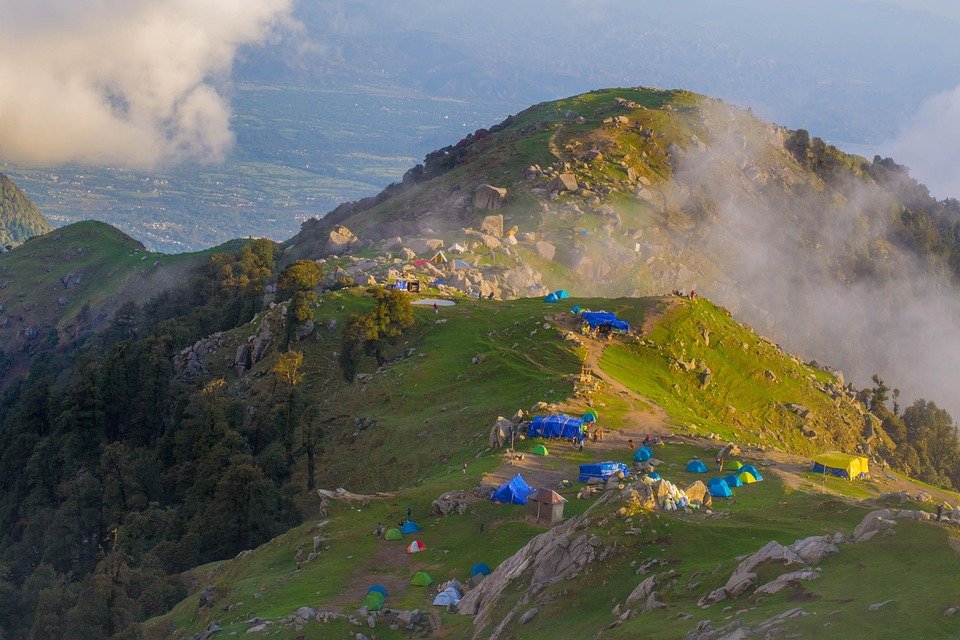
“Triund is just the lobby of Dharamshala. The real mountain is upstairs — and most tourists never find the stairs.”
The hidden secrets of Dharamshala are hiding in plain sight — behind every crowded ridge lies a wilder, quieter, and far more rewarding version of this mountain town that locals have hiked for generations and tour agencies rarely mention. Dharamshala draws millions who snap selfies at Triund and call it an adventure. These are the 12 things that will actually change how you experience it.
The Gaj Pass Trek — 4,200m with Zero Crowds
While everyone queues for Triund, the Gaj Pass Trek starting from Bir or Ghera village reaches 4,200 metres through dense forests, alpine meadows, and rocky ridgelines — with almost no other trekkers. The views of the full Dhauladhar range from the pass are more dramatic than anything on the tourist circuit.
Hill Hikers Tip: Start from Ghera village (not Bir) for a less-used, more beautiful approach through the upper Uhl river valley.
02 LOST TREK
Dev Roopa — “God’s Land” That Google Maps Won’t Find
Meaning God’s Land, the Dev Roopa Trek winds through untouched meadows, alpine forests, and remote valleys deep in the Dhauladhar range. Unlike commercialised trails, there are no tea stalls every 500 metres, no phone signal, and no crowds — just raw Himalayan silence and a spiritual energy that genuinely stops you in your tracks.
Hill Hikers Tip: Only hire guides who know the trail personally. This route is not marked and local knowledge is essential for navigation.
Thatharana Trek Begins at a 15-km-Away Village Nobody Visits
The Thatharana Trek starts at Kharota Village, 15 km from Dharamshala — a small hamlet of traditional homes and lush terraced fields that most visitors drive straight past. The trek climbs through rhododendron forests alongside crystal streams, with constant panoramic views of the Dhauladhar range and none of the litter found on more popular trails.
Hill Hikers Tip: Visit in April for rhododendron bloom — the forest turns vivid red and pink, and it’s among the most photogenic landscapes in Himachal.
Dharamshala Is Actually Two Very Different Towns
Most visitors don’t realise they’re moving between two distinct settlements. Lower Dharamshala (1,457m) is the actual Indian town — a bazaar, government offices, and local life. McLeod Ganj (1,457m higher up) is the Tibetan refugee hub that most tourists know as “Dharamshala.” The 10 km road between them is the most culturally jarring short drive you’ll take anywhere in India.
Hill Hikers Tip: Walk the forest path between lower Dharamshala and McLeod Ganj instead of taking a taxi — it’s through beautiful deodar cedar forest and shows you villages most tourists never enter.
Indrahar Pass at Night: One of India’s Best Dark Skies
The Indrahar Pass (4,300m) is well-known as a tough day-trek, but almost nobody camps at the pass overnight. Above the valley haze and far from any town lights, the Milky Way is visible with the naked eye in a way that’s genuinely overwhelming. The route through Lahesh Cave also shelters glacier-cold drinking water straight from snowmelt.
Hill Hikers Tip: Carry a -10°C sleeping bag minimum. Nights at the pass drop well below freezing even in August, and the open terrain gives zero windbreak.
Naddi Village: The Trekker’s Neighbourhood Nobody Talks About
Naddi Village sits above McLeod Ganj at 1,525m and offers views of the Kangra Valley and Dhauladhar range that no hotel lobby in the main town can match. It’s the real base camp for Triund and Indrahar Pass trekkers — quieter, cheaper, and with a community feel that McLeod’s tourist strip completely lacks.
Hill Hikers Tip: Stay here instead of McLeod Ganj — it’s 8 km closer to the Triund trailhead and the sunrise views from rooftop guesthouses are extraordinary.
Tibetan Cuisine in Dharamshala Is World-Class — But Not Where You Think
The touristy momos near the main square are fine. But authentic Tibetan food — thenthuk (hand-pulled noodle soup), sha phaley (meat pastries), and butter tea — is found in family-run spots in Kotwali Bazaar and along the back lanes of McLeod Ganj. Several are run by elderly Tibetan refugees who learned to cook in Lhasa before 1959.
Hill Hikers Tip: Ask at your guesthouse for where locals eat, not where tourists eat. Price difference is significant; quality difference is enormous.
Kangra Fort: One of Earth’s Oldest Dynasties, Visited by Almost No One
The Kangra Fort, 20 km from Dharamshala, belongs to one of the oldest surviving royal dynasties in the world — continuously inhabited for over 3,500 years. It was seized by the Mughals, the Sikhs under Maharaja Ranjit Singh, and finally damaged by the 1905 earthquake. Most tourists skip it entirely. The views of the Kangra valley from its walls are better than any paid viewpoint.
Hill Hikers Tip: Go on a weekday morning — you may have the whole fort to yourself. The walk down to the Baner river below the fort walls passes through temples almost no tourist ever visits.
October–November Is the Best Month — and the Least Crowded
Everyone knows May–June and the post-monsoon September window. But October and November bring crystal-clear air (monsoon washes out the haze), freshly snow-dusted peaks, and nearly empty trails. Temperatures are cold but manageable, the forests are in autumn colour, and guesthouse rates drop significantly after the Dussehra rush ends.
Hill Hikers Tip: Check snowfall forecasts carefully — Indrahar and Gaj Pass can close with heavy snow in November. But a light dusting in October makes Triund look like a different planet.
Gyuto Monastery Was Founded by a Disciple of the First Dalai Lama
Established in 1474, Gyuto Monastery now houses over 500 monks and is one of the most significant Tibetan tantric colleges in exile. The monastery is known for its unique practice of multiphonic chanting — a single monk producing multiple notes simultaneously. Early morning prayer sessions (open to respectful visitors) are a spiritual experience unlike anything else in the region.
Hill Hikers Tip: Arrive before 6am for morning prayers. Photography inside the prayer hall requires prior permission — ask a monk upon arrival, and most will agree warmly.
The Kangra Museum Has 5th-Century Artefacts Nobody’s Heard Of
The Kangra Museum in lower Dharamshala holds manuscripts, pottery, and artefacts dating back to the 5th century BCE — material from a civilisation that predates the Mughal Empire by over 1,000 years. It’s completely unknown on the tourist circuit, opens six days a week, and charges a negligible entry fee. It’s usually empty.
Hill Hikers Tip: Pair it with Kangra Fort for a half-day history loop — you’ll understand the valley’s depth in a way no trek can give you.
The Entire Valley Is an Off-Trail Network — If You Ask Locals
The paths on tourist maps are a fraction of what exists. Paths connect every village, temple, and water source across the Kangra Valley and Dhauladhar foothills — many through private farmland, orchards, and forests. Local shepherds navigate them intuitively. If you ask in any village tea shop where people walk, you’ll discover routes that no guidebook has named.
Hill Hikers Tip: Learn five phrases in Hindi or Kangri — “kaha se jaate ho?” (where does this path go?) opens more adventures than any app will ever give you.
Hidden Secrets of Dharamshala: Trails at a Glance
Lesser-known alternatives to the Triund tourist trail
| TREK | MAX ALTITUDE | DIFFICULTY | BEST SEASON | CROWD LEVEL |
|---|---|---|---|---|
| Gaj Pass | 4,200m | Difficult | Jun – Sep | Very Low |
| Dev Roopa | ~3,800m | Difficult | May – Oct | Very Low |
| Thatharana | ~2,800m | Easy–Mod | Mar – Nov | Low |
| Indrahar Pass | 4,342m | Difficult | May – Oct | Moderate |
| Kareri Lake | 2,934m | Moderate | Apr – Jun, Sep–Oct | Low |
| Thatharana (Kharota) | ~2,600m | Beginner | Mar – Nov | Very Low |
| Triund (for reference) | 2,850m | Easy | Mar – Nov | Very High |
When to Go: The Honest Guide
Beyond the generic “best season” advice
MAR – APR
Rhododendron Season
Forest treks in full bloom. Snow still on high passes. Crowds building slowly.
MAY – JUN
Peak Season
Clear skies, all trails open. Busiest and most expensive period.
JUL – AUG
Monsoon
Lush but risky. Landslides on high routes. Lower forest trails manageable.
SEP – OCT
Sweet Spot
Post-monsoon clarity. Waterfalls full. Autumn colour. Recommended.
NOV – FEB
Winter & Snow
High passes close. Lower trails quiet and beautiful. Snow transforms everything.
The Mountain Gives Back What You Put In
The hikers who remember Dharamshala for decades are rarely those who checked Triund off a bucket list. They’re the ones who got lost behind Naddi Village, shared butter tea with a monk, asked a shepherd where his path went, and woke before dawn at a high camp to watch the Dhauladhar turn from black to orange to brilliant white.
These 12 secrets aren’t exotic or difficult to find — they’re just a little off the line that most people follow without questioning. The hidden secrets of Dharamshala reward those who slow down, ask questions, and walk just a little further than everyone else. The mountain has been here for millions of years. It’s patient. The only question is whether you are.
Happy hiking. Go slow. Go off-trail. Talk to people.